
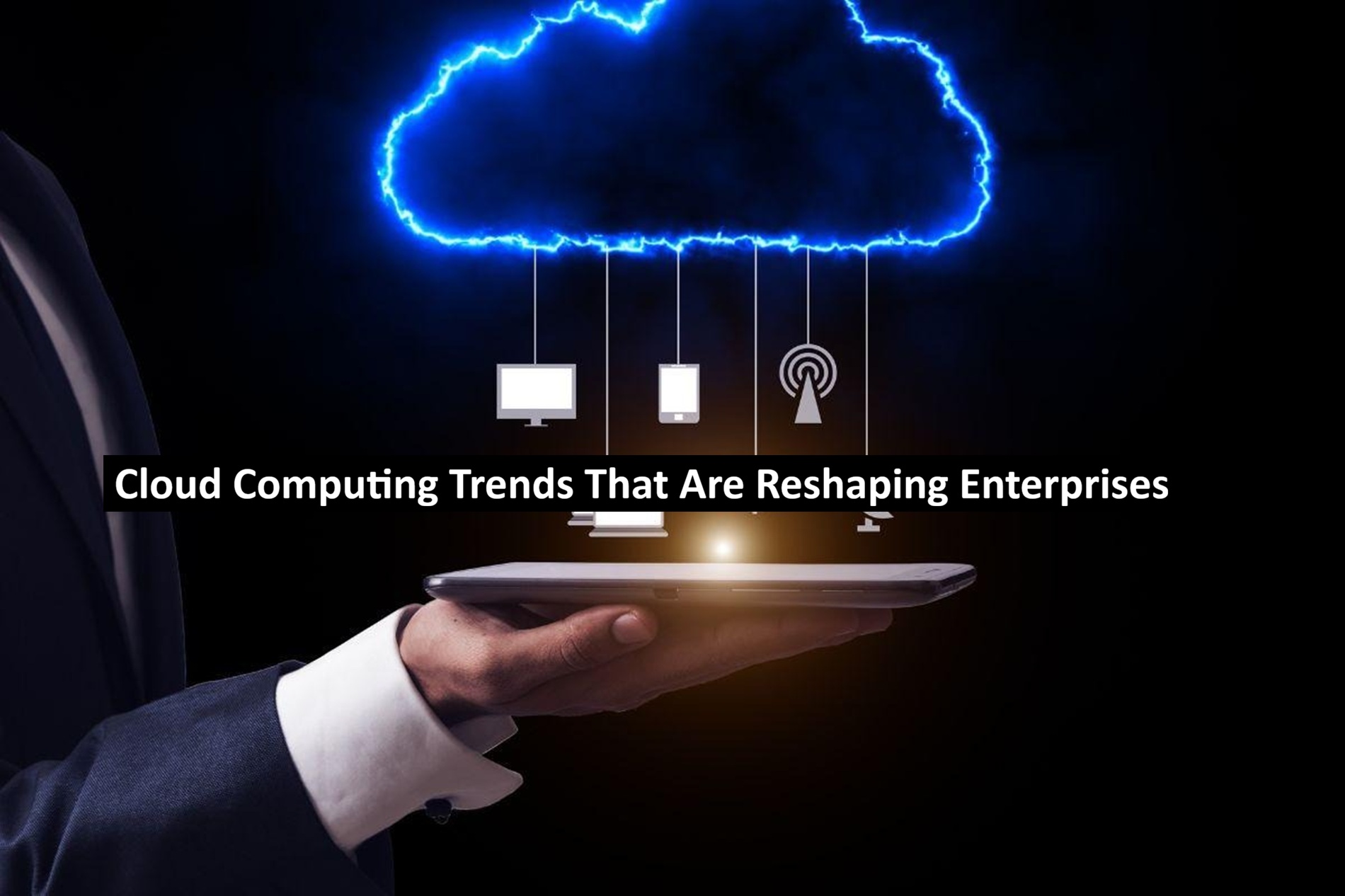
The Powerhouse Behind Digital Transformation Cloud computing has rapidly established itself as the underlying technology for many of today’s enterprise initiatives. Modern businesses and organizations of all industries leverage the power of cloud-hosted applications and infrastructure to allow operations run faster, at scale, at much lower costs.
Enterprises are increasingly investing in advanced cloud solutions to improve agility, strengthen security, and accelerate innovation. From artificial intelligence integration to hybrid cloud environments, the latest cloud computing trends are helping businesses remain competitive in a rapidly changing digital landscape.
Hybrid and Multi-Cloud Adoption
Most Companies Shift From Single Cloud To Multiple Solutions Organizations also are moving to a hybrid or multiple cloud-based strategy as opposed to single provider technology and strategies of that type. A hybrid cloud is essentially a mix of on-premise as well as the cloud and a multi-cloud offers services with various suppliers and suppliers to businesses. Businesses can benefit from flexibility, reduced business interruptions and avoid reliance on one particular solution supplier with a hybrid cloud solutions method.
Businesses can optimize workloads by selecting the most suitable cloud platform for specific applications. Hybrid and multi-cloud environments also improve disaster recovery and business continuity planning.
Read: How AI-Assisted Development Is Changing the Software Industry
Artificial Intelligence Enhances Cloud Services
Smart cloud platforms AI is revolutionizing the cloud, bringing more intelligence and efficiency. Cloud platforms today enable customers to use their massive datasets through the following AI-powered offerings: • AI in Data Analytics • Predictive Maintenance • Intelligent Automation • Cybersecurity • AI in Customer Engagement It can assist any enterprise process a big quantity of data and derive additional efficiencies as it can guide toward and automate decisions that result in betterment.
Businesses are increasingly using cloud-based AI tools to automate repetitive tasks, generate business insights, and deliver personalized customer experiences. AI integration continues to expand across industries including healthcare, finance, retail, and manufacturing.
Edge Computing Supports Real-Time Processing
Cloud adoption combined with Edge computing helps keep data near the sources of data. Rather than all data getting moved to a huge datacentre somewhere on the Internet, the information can be processed and utilized closer to the local sites where it is collected. This enables applications as complex as intelligent traffic control for autonomous driving, to smart factory automation, remote healthcare, intelligent buildings, the Internet of Things, smart cities and much more to get performed more efficiently, rapidly and at lower cost.
With cloud computing and edge technology, enterprises can effectively deal with huge volumes of real time data while offering scaling and performance.
Cybersecurity Remains a Top Priority
The use of security in enterprises has grown considerably as organizations migrate sensitive workloads to the cloud. Today, many cloud providers offer increasingly powerful security for their data, such as encryption, identity management, multi-factor authentication, constant monitoring, automated threat detection, and zero trust security systems designed to secure sensitive information.
As enterprises move critical workloads to the cloud, cybersecurity has become increasingly important. Cloud providers continue to strengthen security through encryption, identity management, multi-factor authentication, continuous monitoring, and automated threat detection. Businesses also recognize that regular website maintenance improves website speed and search rankings, helping ensure secure, high-performing digital platforms while delivering a better user experience. Ongoing risk analyses, an employee risk and training program, compliance with any industry-based, external controls and regulations provide another level of reduction to potential cyber threats and long-term business protection.
Cloud-Native Applications Drive Innovation
Cloud-Native Development Many organizations are creating cloud-native apps specifically designed for the cloud. Many companies employ technology including microservices, containers and evenKubernetesto speed deployment while maintaining security and performance and making for a highly available software system. Companies are able to roll-out application updates and scale software on demand.
Sustainability Through Cloud Computing
The Green Cloud vendors’ efforts have been in large part reflected in substantial investment in clean green power and a focus on building hyper efficient facilities to prevent any unnecessary damage to the environment. One of the benefits of using a cloud platform from a business ‘s perspective is that we can more efficiently deploy resources and reduce wasteful hardware, which in turn will mean lower energy consumption for its on-premise servers. Cloud services fit neatly into an energy efficiency strategy, it’s aligned with any Green policy or directive.
Future Outlook
Cloud computing’s future is tied to developments in AI, edge computing, serverless computing, quantum computing, and intelligent automation, to mention a few. In other words, cloud platforms will keep getting more resilient, more secure and more agile as they develop greater abilities to handle businesses with more complex operations. As they adopt these innovative cloud services, companies can boost overall resilience, agility and even competitiveness.
With continued digital transformation, cloud computing will continue to provide an essential element of innovation for business growth. As business becomes more connected, enterprises that invest deliberately in these key technologies while ensuring safety, security, and innovation for all employees will be best suited to compete on the future business stage.
Author’s Bio:
Lalit is a freelance content writer, blogger, and digital marketer with 6 years of experience. He writes clear, engaging content on cloud computing market, SEO, technology, business, education, and market trends, making complex topics easy to understand and apply.